What happens when wages can’t keep up?
When wages don’t keep up, people don’t just cut back; they scramble to earn more. And that reality should shape how we design solutions.

Inflation during the COVID-19 pandemic drove up the cost of basic necessities, and for low- to moderate-income households, wages didn’t meaningfully increase in real terms — meaning their dollars didn’t go any further. In fact, purchasing power during this period was weaker than in the five years before the pandemic and substantially lagged behind that of higher-income households, whose real wages grew at nearly twice the rate. That dynamic has continued into 2026, with prices still rising due to a combination of geopolitical tensions, economic shocks, and climate-related disruptions. Meanwhile, wages are failing to keep pace, leaving many households under ongoing financial strain.
But an important distinction is that, for many households, the challenge isn’t overspending; it’s that their income simply isn’t keeping up with the cost of living.
At SaverLife, we have seen how this pressure shows up in the lives of our members as they contend with juggling expenses, budgeting, and saving on low to moderate incomes. For members like José, a born-and-raised New Yorker, feelings of overwhelm and exhaustion mean walking a tightrope, trying to stay on top of bills and be careful with every dollar.
It’s tough sometimes because I feel like I’m always trying to juggle things to make my income work with the expenses I have.José, SaverLife member (NY)

Finding ways to earn more
While José is a strategist at heart, there is only so much cutting back and trading off someone can do to make the numbers work. To cover his expenses, he searched for alternative ways to boost his income by reselling items and taking part in product surveys and trials. But it never felt like enough.
Every year, things get more expensive. Last year was expensive, and this year it’s even more expensive than last year.Carla, SaverLife member (FL)

The same is true for Carla, a member in Florida who says ‘yes’ to gig work opportunities and sells things online as needed. For Mahiyat, it means adding DoorDash deliveries to her already busy schedule. For Courtney, it was taking on house cleaning gigs to bring in more income and save extra cash for her and her son. Members like José, Mahiyat, Courtney, and Carla are not the exceptions; they are the norm, illustrating what stagnant wages and rising costs look like in everyday life for our members. We see this clearly showing up in how members are using SaverLife’s Financial Navigator.
Navigator in action
More than 5,000 SaverLife members have engaged with our Financial Navigator, and something that we’ve learned is that the number one thing they’re looking for is information on how to improve their income. Given what we know about wage growth and distribution, this is not surprising, and it offers a clear opportunity for us, as a member-driven organization, to create meaningful value and support for our community.
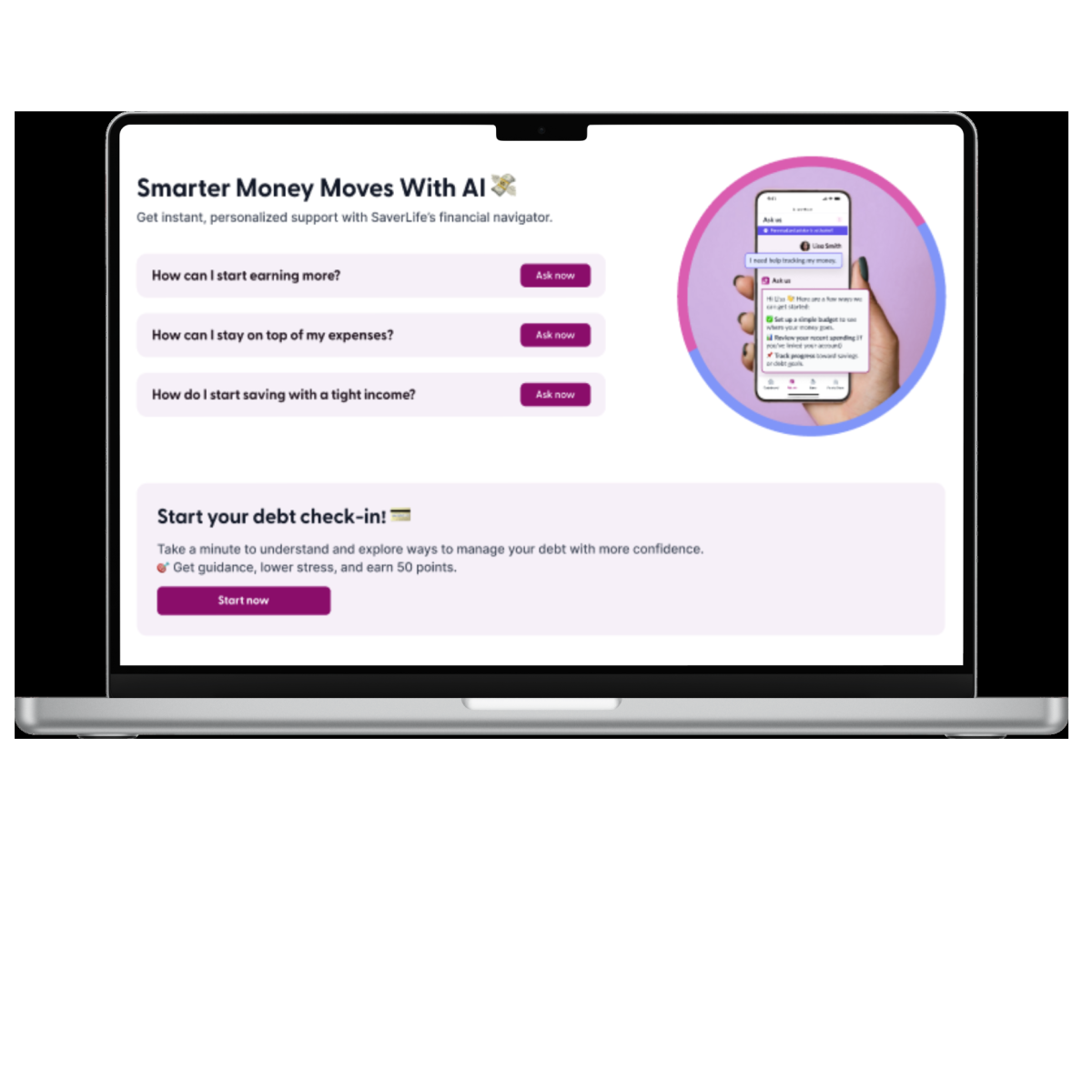
Over the course of the next several months, SaverLife will share more information about exciting partnerships and collaborations designed to support our members’ income goals. We will continue building trusted relationships and expanding opportunities for members to engage with tools like our Financial Navigator, particularly for members who lack trusted, accessible resources that reflect the complexity of their financial situations, making it easier to ask hard questions without fear of judgment.
A direct feedback loop
Through our work with members, we are uniquely positioned to hear directly from the families most affected by economic hardship and to respond to their needs. Our members consistently tell us that living on a low income is a delicate balance, one that can be easily disrupted by rising costs for basic necessities. This reality must remain front and center as new programs, policies, and products are developed, given the profound impact they can have on people’s quality of life.
At SaverLife, we believe that when used thoughtfully, leading-edge technologies like AI can be a powerful force for good, ensuring that solutions are informed by the lived experiences of those they are designed to support. That means building with intention: grounding our tools in what members are telling us and designing them to provide meaningful, actionable guidance that reflects the realities of their daily lives.
Member stories: Income and affordability
Our members share their stories on how they navigate budgeting, saving, and expenses amid financial strain.