
When SaverLife parents talk about building wealth, they often talk about their children. Many tell us that creating more opportunities for the next generation is one of their biggest financial goals. As new savings tools like 530A (Trump) accounts become available, it’s important to understand how they work, who may benefit, and how they compare to options like 529 plans so you can make the best decision for your family’s goals. ‘
What is a 530A account?
A 530A account is a tax-advantaged investment account designed to help children build long-term wealth. These accounts officially opened July 4, 2026, after initial sign-ups began over the 2025 tax season.
Parents or guardians open the account, and the money is invested with the goal of growing over many years.
One of the biggest differences from other children’s savings accounts is that some eligible children receive money to get started.
Who qualifies for free seed money?
Depending on your child’s age and where you live, your family may qualify for:
- A $1,000 federal contribution for eligible children born between January 1, 2025, and December 31, 2028
- A $250 philanthropic contribution for many children born between 2016 and 2024 who live in qualifying communities
- See if your child qualifies here.
- Additional local pilot funding in select communities
If your child qualifies, opening an account could mean starting their savings with money you didn’t have to contribute yourself.
What can the money be used for?
The account is designed for long-term wealth building.
As your child becomes an adult, the money may help with goals like:
- Buying a home
- Paying for education
- Starting a business
- Building retirement savings
The account generally transitions into a traditional IRA at age 18 and follows those rules.
Is a 530A account right for your family?
It depends.
It may be worth considering if:
- Your child qualifies for free seed money.
- You’re looking for another long-term savings tool.
- You want to give your child’s investments more time to grow.
You may want to compare your options if:
- You’re already contributing to a 529 plan.
- Your child doesn’t qualify for seed funding.
- Your budget only allows you to save in one account.
For many families, the biggest benefit is the free contribution, not necessarily replacing other savings accounts.
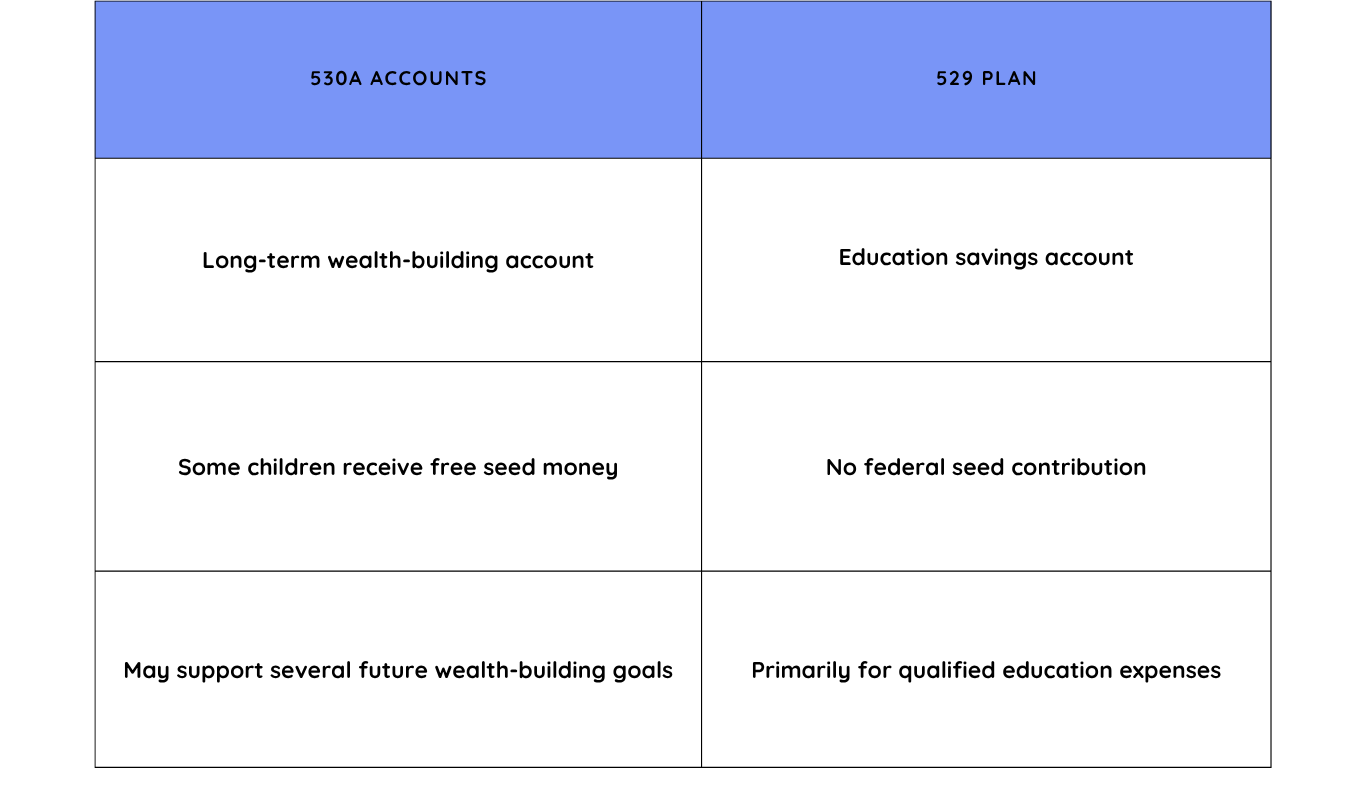
Depending on your family’s goals, one account may make more sense, or you may decide to use both.
Questions to ask before opening an account
Before deciding, consider:
- Does my child qualify for free seed money?
- Am I already saving in another account for my child?
- Can I comfortably contribute without reducing my emergency savings?
- What are my long-term goals for this money?
- Do I understand when and how the money can be used?
Resources to learn more about the sign-up process:
Why these accounts matter
Many SaverLife parents are already saving for their children’s future, even while balancing tight budgets.
In fact, our April 2026 survey found that 20% of SaverLife parents already use education savings accounts like 529 plans or Coverdell ESAs—about three times the national average.
However, only 12% reported signing up for a 530A account.
That doesn’t necessarily mean the accounts aren’t valuable. They’re still very new, and many families are still learning.
The bottom line
Every family’s situation is different, and there’s no one-size-fits-all savings strategy.
The SaverLife research suggests that many parents are still deciding whether a 530A account fits into their financial plans. If your child qualifies for seed funding, it may be worth taking a closer look. If not, you may decide your current savings strategy already meets your family’s needs.
The most important thing isn’t choosing the newest account; it’s finding a savings plan you can stick with. Even small, consistent contributions today can help create more opportunities for your child tomorrow.
SaverLife provides free financial resources, interactive savings tools, rewards, and challenges to help people reduce financial stress, build healthy money habits, and work toward greater financial stability. Free to join.