
When it comes to paying down debt, the debt snowball may get all the attention. But if your goal is to save the most money (and often become debt-free sooner), the debt avalanche is the sleeper winner. Here’s how it works and why it can make such a big difference.
The basics
Like the debt snowball, the debt avalanche focuses all of your extra payments on one debt while continuing to make the minimum payments on everything else.
The difference is which debt you target first. Instead of paying off the smallest balance first, you prioritize the debt with the highest interest rate. Once that’s paid off, you roll that payment into the debt with the next-highest interest rate, and so on.
This means you’re tackling the most costly accounts first.
How to prepare
Start by making a list of all your debts. Gather copies (or PDFs) of your bills, or open the apps to find your balances and interest rates (usually marked as “APR” or annual percentage rate, and often tucked away on the second or third page of your bill. Jot down the account name, interest rate, and balance. For example:
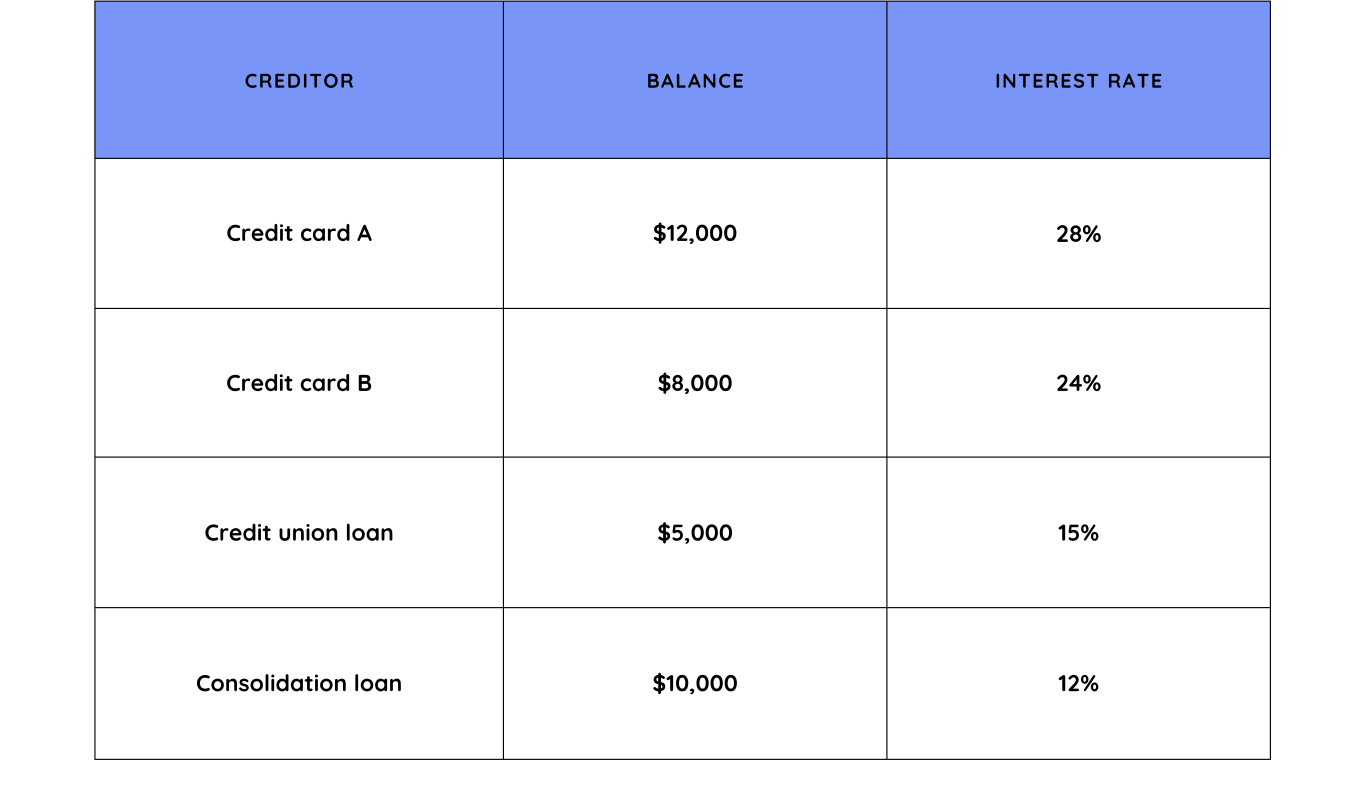
Just for fun, feel free to check your car, student loans, or mortgage rates as well, though their interest rates are usually lower than those for other types of debt. Don’t forget short-term loans or cash advances; some advertise themselves as “interest-free,” but fees can make them incredibly expensive.
If you’re unsure what a fee-based loan is really costing you, you can use this calculator to determine the effective interest rate.
Once you have things listed, reorder the list (if needed) with the highest interest rate at the top and the lowest at the bottom.
That’s your Debt Avalanche.
Build Your Avalanche
Next, determine a realistic amount to put extra toward the debt. Maybe an extra $100/month? Or even just $10-20 per paycheck? If you don’t already keep a spending plan, it’s a great chance to get curious about your cash flow.
Now that you’ve determined how much you can feasibly pay, add that to the first debt in your avalanche. You’ll continue to pay the minimum payment on all other debts.
Once the balance of the first debt is at zero (yay!), roll that payment (minimum + extra) over to the second debt.
If funds are especially tight and “extra” just isn’t in the cards for now, don’t worry. Instead, commit to not reducing your payments as your monthly minimums shrink.
For example, if you paid $50 on the highest APR debt this month, keep it at $50 next month, even if the minimum goes down to $45. It’s a slower avalanche, but it’s still gaining traction!
Tips for success
Avoid taking on additional debt during the process, if possible. It can be tempting to throw every spare dollar at your high-interest debt, but if you’re using money that should have gone to the electric bill or gas, that debt often comes right back in another form. Opt to cut unnecessary costs (even if just temporarily) or use lower-interest options down the list as a last resort.
Track progress to boost motivation. Sometimes it’s hard to remember the progress you’re making, especially when the early increments are small. A spreadsheet, debt tracker, or even coloring in a chart for every $100 of principle paid off can make the progress more visible. Each step on the journey gets you closer, so celebrate it!
Quick Cost Comparison
Let’s compare 4 options for our $35,000 in debt (listed above):
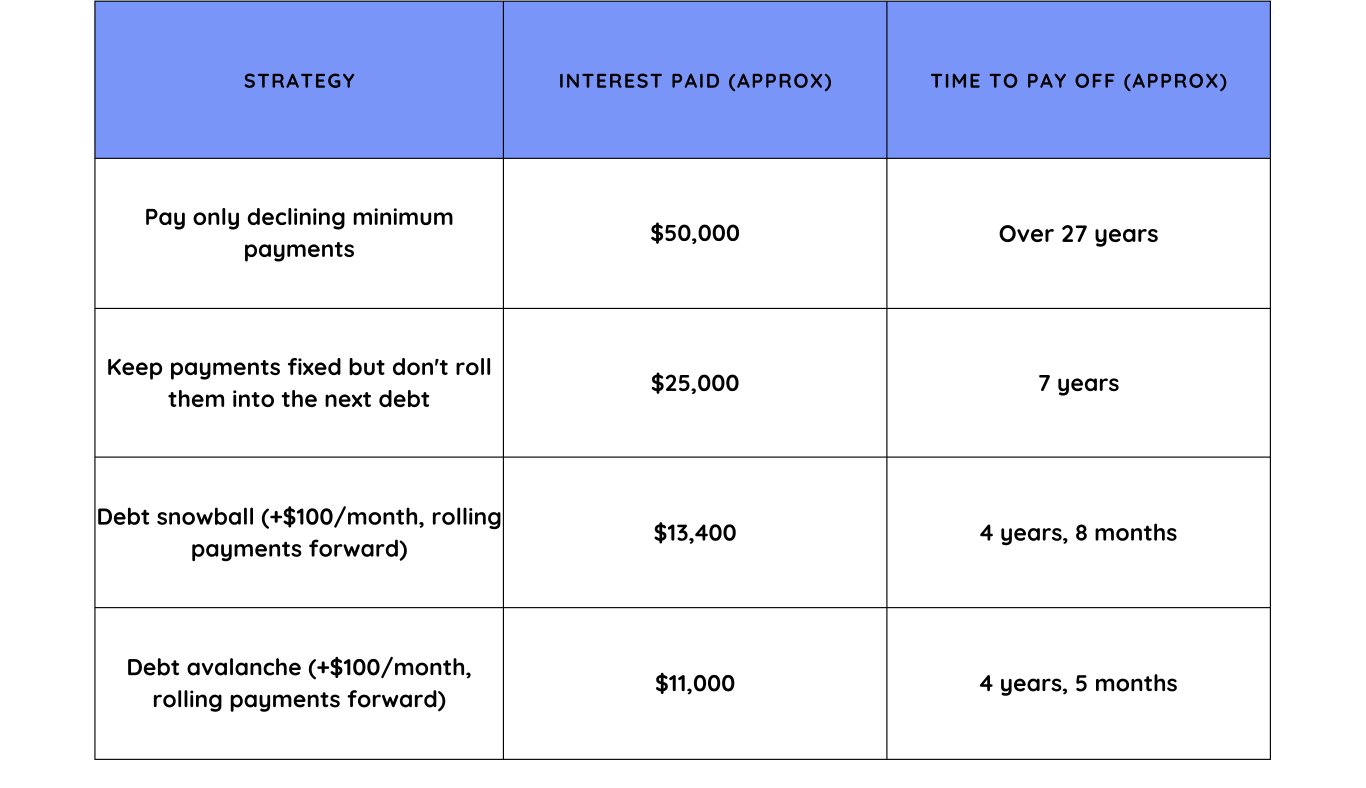
Each option saves you more compared to the one above it. But if you can set aside any extra funds and stay committed to the process, the debt avalanche provides the most savings. In this example, it saves about $2,400 in interest and gets you debt-free three months sooner, even compared to the debt snowball, simply by changing the order in which you pay your debts.
The bottom line
There’s no single “perfect” debt payoff method. The best strategy is the one you’ll actually stick with, and that fits your overall financial picture. If your goal is to pay less interest and keep more of your money, the debt avalanche deserves a serious look.
Take 15 minutes this week to list your debts, write down each interest rate, and reorder them from highest to lowest. You may discover that a small change in your payment strategy could save you thousands of dollars over time.